Alternative AAC Modeling That Respects Boundaries



Last Updated: August 10, 2026
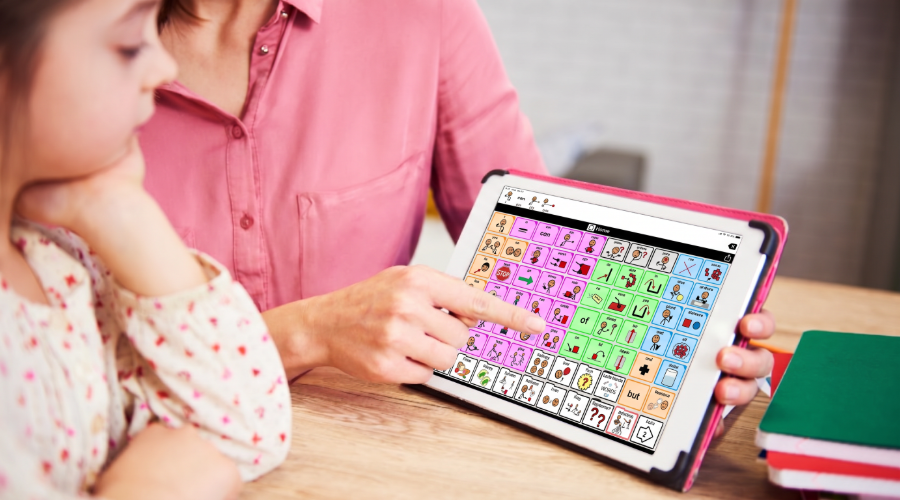
As an Alternative and Augmentative Communication (AAC) user gains confidence with their device; they often develop a sense of ownership over it. This is a great sign that the user is beginning to view their AAC device as their voice! However, it can also make it difficult for communication partners to model language for the user if they become resistant to others using their device.
Alternative Ways to Model 🔗
If an AAC user has developed a sense of ownership over the device—and prefers others to not touch it—we want to respect their boundaries and autonomy over their voice. Rather than modeling on their device, try these ideas:
- Print off and laminate lite tech core boards. You can point to the icons on a paper copy and narrate with your own voice to model. Bonus: You now have a lite tech backup for users in situations where their device cannot be used.
- Model on your own device. If you have access to another tablet (like a personal use iPad), use that instead! Many app developers offer free professional licenses for their speech apps for SLPs to have on their personal devices.
- Narrate how to find icons and have the user complete the steps. You can label a sequence verbally (e.g., “we are going to our food page, then looking for the picture of a banana. It’s yellow and skinny”) to help your user expand their vocabulary and use new icons on their device.
- Use a fun object. Our users may prefer others not to touch their device, but they may be okay with items touching it! Try using a bubble wand or stuffed animal to point to icons on their device.
- Try a laser pointer. Direct AAC users to different areas of the speech app using a laser pointer! This is effective for pointing to a variety of icons without having to touch the device.
Teaching and Empowering🔗
A strong sense of device ownership is something to celebrate—it reflects growth, confidence, and identity for AAC users. By adapting how we model language, we can continue supporting communication development while honoring each user’s autonomy.
Need More Advice? Ask an SLP!🔗
From speech app guidance to AAC resources, our SLP Empowerment Team is here to help!