Core vs. Fringe Vocabulary: Where to Start


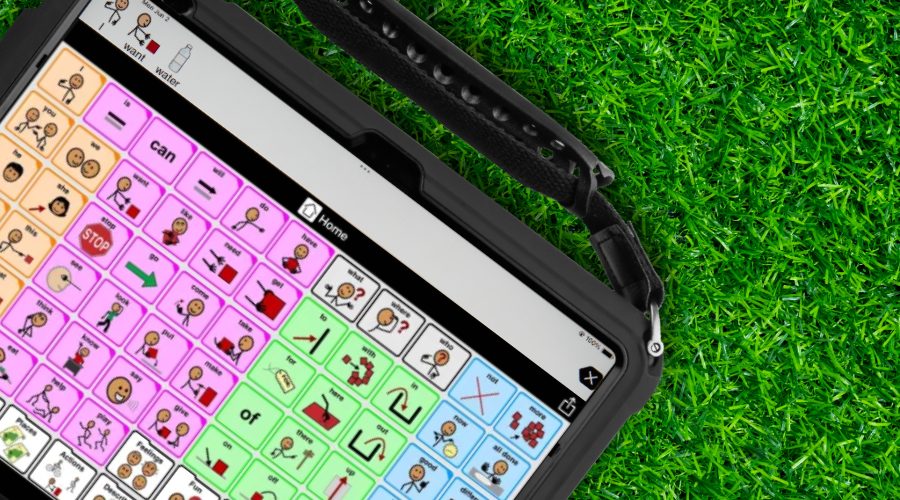
When working with AAC devices, the phrases “core vocabulary” and “fringe vocabulary” come up frequently. What are these terms and why do they matter?
Core Vs. Fringe Vocabulary🔗
Core vocabulary refers to frequently used words like “go,” “want,” “eat,” “drink” and “more.” Core vocabulary is often found on the home page and can be used across contexts and make up 75-80% of our daily communication.
Fringe vocabulary includes more specific words that are meaningful to the AAC user, such as favorite foods, people, places, or interests like “baseball,” “mom,” or “YouTube.” Together, core and fringe vocabulary give AAC users access to a complete language system that helps them communicate effectively in everyday life.
Modeling Core Words🔗
It is most effective to begin by modeling core vocabulary because of their versatility. A small set of core words can be combined in many ways to express a wide variety of messages. An AAC user who has learned the core vocabulary word “open” can ask a caregiver to open:
- Their lunchbox
- Their pretzel package
- Their water
This flexibility allows AAC users to communicate more independently and creatively.

Examples of Core Word Activities:
|
Activity |
Core Words |
|---|---|
|
Request Items |
“Eat,” “More,” “Stop,” “Help,” “Drink” |
|
Request Actions |
“Go,” “Stop,” “Down,” “Up,” “More” |
Model Core and Fringe Words Together During Requesting Activities🔗
Starting with core vocabulary creates a strong language foundation, while gradually introducing fringe vocabulary helps AAC users express their interests, preferences, and identity in more meaningful ways. Once a strong understanding of core vocabulary and device navigation begins to develop, fringe vocabulary can be added to support more personalized communication. Most robust boards come with core and fringe already pre-programmed!
|
Activity |
Core Words |
|---|---|
|
Request Items |
“Eat Pretzels,” “More Pretzels/Water,” “Stop/Pretzels,” “Like Pretzels,” “Drink Water” |
|
Request Actions |
“Go Trampoline,” “Stop Trampoline,” “Down Slide,” “Up Arm,” “More Swing” |
Modeling does not always have to be in full sentences, especially when using core words! Modeling a single core word at a time, in combination with your spoken language, still helps build a solid language foundation for your AAC user. You can use core words to model across multiple different contexts, including but not limited to, requesting, rejecting, and commenting.
Need More Advice? Ask an SLP!🔗
From speech app guidance to AAC resources, our SLP Empowerment Team is here to help!