Eat, Play, Read: Everyday AAC Activities for Communication



Last Updated: September 8, 2026
Using a speech device doesn’t have to feel like another therapy session. Some of the best opportunities to practice communication happen during things you already do together.
Activities to Try🔗
Here are some activities and resources to help get those creative juices flowing.
Take a Look, It’s in a Book🔗
Books are a great way to practice new words and simple messages. Depending on the book, you can focus on a variety of things.
- Answering Questions: “What is that a picture of?” → “Dog”
- Turn-Taking: “Turn the page”
- Sentence Building: “I + see + a + truck”
- Requesting: “Can we read a book?”
- Identifying: “Yellow sun”
If you don’t have a ton of books at home, here are some resources for you:
- Free eBooks from WorldStories: a UK nonprofit with multilingual books for kids.
- Free eBooks from OxfordOwl: another UK nonprofit dedicated to increasing literacy rates among children ages 3-11.
- Find your local library: Libraries have a bounty of free resources in digital and physical formats. Plus, many library events don’t require a library card to attend.
- Book subscription for kids from Epic!: Parent Enthusiast Mark Randall recommends this eBook, audiobook, and learning video platform for parents. His son loves it!
- Check out a local bookstore: Your local independent bookstore will love to help you find a good read for your loved ones. IndieBound helps people find and support indie bookstores in your area.
Snack O’Clock🔗
Snack time gives your child several opportunities to communicate. The big secret here is to add actual pictures of their favorite snacks to the device.
Use modeling to give them opportunities to make simple food choices. Capitalized words in the examples below are the buttons to tap while you talk.
- Making Decisions: “Do you want CHIPS or APPLESAUCE?” Then, let your child use their device to answer.
- Asking Questions: “Can I TRY it?”
- Requesting Help: “Do you need HELP opening that?”
- Commenting: “The brownies are GOOD.”
- Protesting: Show your loved one how to say, “NO thank you” to a food or snack they don’t like.
If you’re feeling bold, offer something brand new alongside a snack they already like. They’ll likely choose their snack of choice, but maybe they’ll surprise you!
Play DJ🔗
If your child loves music, let them use their device to request a favorite song or tell you what they like. While it’s not always fun listening to toddler tunes, there are so many songs with instructions and lyrics that pair perfectly with modeling on the device. Mark recommends Super Simple Songs on YouTube.
While listening to music, consider using these phrases:
- Asking Questions: “What is this song?”
- Requesting: “I want ‘Wheels on the Bus.’”
- Sentence Building: “I + like + music.”
- Commenting: “Fun!”
- Protesting: “Not that song”
Remember: “NO” or “NO SING” are still valid forms of communication deserving celebration. If they don’t like the song you picked, ask them what song they want to listen to.
You can also program their favorite songs as buttons on their device. Check out /speech app guides/ to find out how!
Game On!🔗
Playing games naturally encourages communication. You can create communication opportunities with just about any game. Here are some ideas for what to practice while you play a game:
- Decision Making: “Would you like to play GO FISH?” Encourage them to choose what they’d like to do on the device.
- Turn-Taking: “My Turn!” “Your Turn!”
- Identifying: “I have 2 matches.”
- Commenting: “You win!”
Keep it simple. Roll a ball back and forth while saying, “My turn… your turn.”
You might have better luck with games on their tablet or computer, too. There are some great games designed to help kids practice interactions. Below, you’ll find links to some online games that are great for fostering communication and are fun to play with your child.
Easy Does It🔗
You don’t need to turn every activity into a lesson. Follow your child’s interests and look for those little moments to encourage communication. Start with something they already enjoy and go from there.
The goal isn’t perfection. Helping your child learn about their device while finding time to bond and have fun is most important.
Free Resource🔗
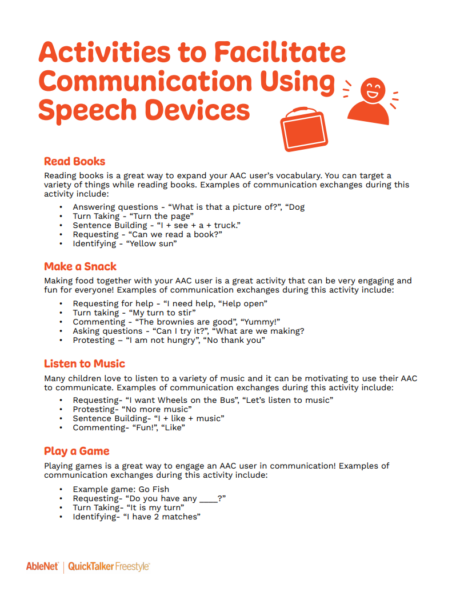
Download this resource for some examples of activities that you can do with your loved ones!
Need More Advice?🔗
Reach out to the SLP Empowerment Team or contact a Parent Enthusiast!