Modeling AAC 101: Basics for Effective Communication


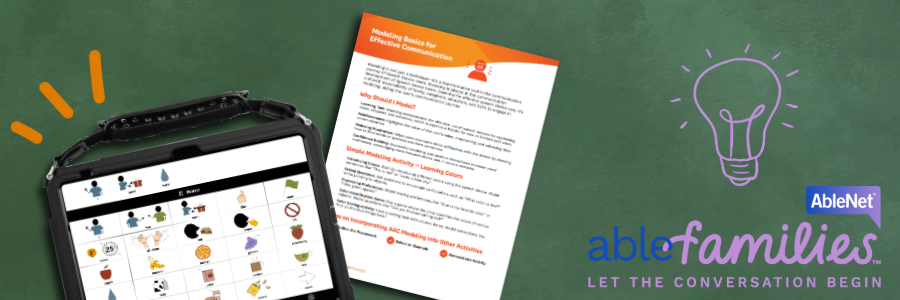
Even before receiving an AAC device, many parents and caregivers hear therapists and SLPs talk about “modeling” the communication they hope to see. Modeling can be scary for first-timers, and families may be asking “Am I doing this right?”
Let’s break down what modeling is, what it looks like, and how it helps your child!
What Is Modeling?
AAC modeling means using the AAC device yourself while you talk to show an AAC user how it works. You say the word out loud and select the matching word or symbol on their device. This shows your child where words are located and how the device can be used during everyday communication.
You do not have to select every word you say. Focus on one or two important words.
For example:
- While playing: you tap “stop” and say, “stop!” and freeze.
- During snack: you tap “like” and say “I like apples!”
- When you want help: you tap “help” and ask “Will you help me?”
Why Should I Model AAC Use?
Modeling teaches your loved one how the device works and gives them a chance to watch and learn without being tested. It establishes that their device is a real voice showing our children that AAC is a meaningful and accepted way to communicate.
AAC modeling also supports more than language skills. It helps AAC users:
- Understand how to find words and build messages.
- Feel that their communication is valued and respected.
- Reduce frustration when learning a new or complex system.
- Build confidence to use AAC across settings like home, school, and the community.
Modeling reduces frustration and builds confidence. Sometimes our children know what they want to say but cannot find the right word. Modeling can help them learn where words are and give them more ways to express their wants, needs, feelings, and ideas.
How Do I Model AAC?
So, what does modeling look like? It doesn’t have to be a special lesson; you can do it at any time during your day. Below, you’ll see some examples. The capitalized words are the what you can press while you speak.
- At breakfast: “What would you like to EAT?” or “Would you like some MILK?”
- While getting dressed: “What SHIRT would you like to wear?” and “Let’s put on our SHOES.”
- During playtime: Play hide and seek and say: “Ready, set, GO,” “Want to go HIGHER?”, or “MY TURN.”
Model one or two useful words during moments that are already happening. Give your child time to watch, process, and respond in their own way.
The goal is not to use the device perfectly. The goal is to help your child see that their device can be used throughout the day for many different reasons.
Quick Tips
- You do not have to model every word.
- You don’t have to create a full sentence on the device.
- It’s okay to make mistakes.
- Model as often as you are comfortable.
- Don’t pressure your child to repeat or respond.
You’re Doing Great!
Most importantly, give yourself some grace. Modeling may feel awkward at first, especially while you are still learning the device yourself. You are not expected to know where every word is or get everything right.
Every time you use the device, you are showing your child that their voice matters and that the AAC belongs in your family’s everyday life
Have a Question?
Contact a customer support team or submit a question to a Parent Enthusiast.