Tips for Teaching Self-Advocacy on an AAC Device



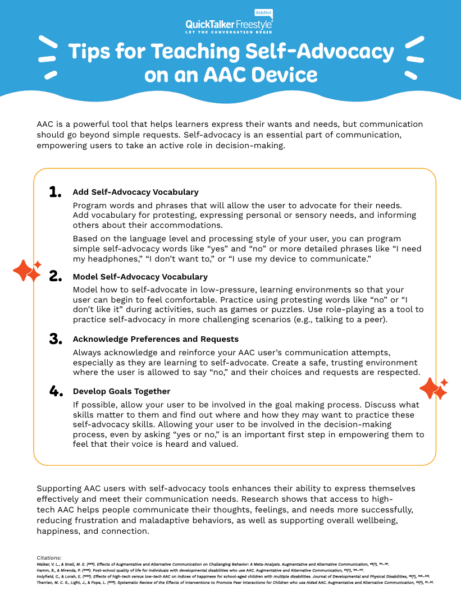
Augmentative and alternative communication (AAC) is a powerful tool that helps learners express their wants and needs, but communication should go beyond simple requests. Self-advocacy is an essential part of communication, empowering users to take an active role in decision-making.
Read on for four tips for teaching QuickTalker Freestyle users self-advocacy. Download the handout below.
What is Self-Advocacy? 🔗
Self-advocacy is a person’s ability to express needs, preferences, and boundaries on their own. Saying “no,” asking for help, or requesting to use the bathroom are all examples of self-advocacy.
For AAC users, this looks like having words and phrases on their device to express what they want, need, or don’t like, and being able to use them independently.
Strategies for Self-Advocacy🔗
Here are four ways that you can start teaching your child self-advocacy:
Add Self-Advocacy Vocabulary🔗
Program words and phrases that will allow the user to advocate for their needs. Add vocabulary for protesting, expressing personal or sensory needs, and informing others about their accommodations.
Based on the language level and processing style of your user, you can program self-advocacy words and phrases like:
- Agreeing/Disagreeing: “yes” and “no”
- Requesting: “I need my headphones,” “I need a break”
- Accommodations: “I use my device to talk”
Your speech app may have these as part of your vocabulary already or you may have to add them. Check out the speech app guides to find out where these words are!
Model Self-Advocacy Vocabulary🔗
Model how to self-advocate in low-pressure learning environments so that your user can begin to feel comfortable. Show the user where and when to use certain words or phrases.
- Practice protesting: say, “I don’t like it” or “no” during games and puzzles.
- Role-play: practice harder situations, like talking to a peer, by acting out a scene.
- Show Needs Requests: show them how you might ask for help during play.
Acknowledge Preferences and Requests🔗
Always acknowledge and reinforce your AAC user’s communication attempts, especially as they are learning to self-advocate. Create a safe, trusting environment by:
- Responding right away
- Taking their messages seriously
- Letting “no” truly mean no
Develop Goals Together🔗
If possible, allow your user to be involved in the goal making process. Empower them to feel heard and valued by:
- Asking what matters to them
- Offering choices, even simple yes or no options
- Talking about where they want to practice these skills
Empower AAC Users to Use Their Voice🔗
Supporting AAC users with self-advocacy tools enhances their ability to express themselves effectively and meet their communication needs. Research shows that access to high-tech AAC helps people communicate their thoughts, feelings, and needs more successfully, reducing frustration and maladaptive behaviors, as well as supporting overall wellbeing, happiness, and connection.
Share and download this resource!
Was this article helpful?
1 of 1 found this helpful