Halloween AAC Activities: Free Crafts, Sensory Play & More


Halloween brings costumes, crafts, pumpkins, and plenty of excitement, but it can also bring crowds, noise, and unfamiliar routines. For AAC users, that mix is a great chance to build language and a reason to prepare ahead.
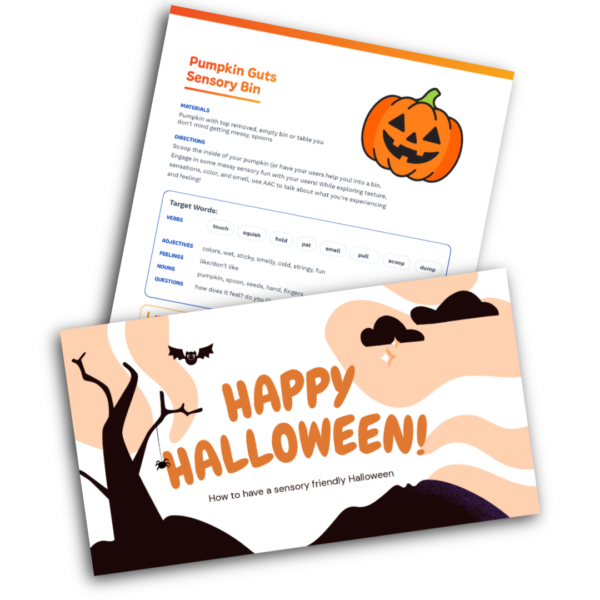
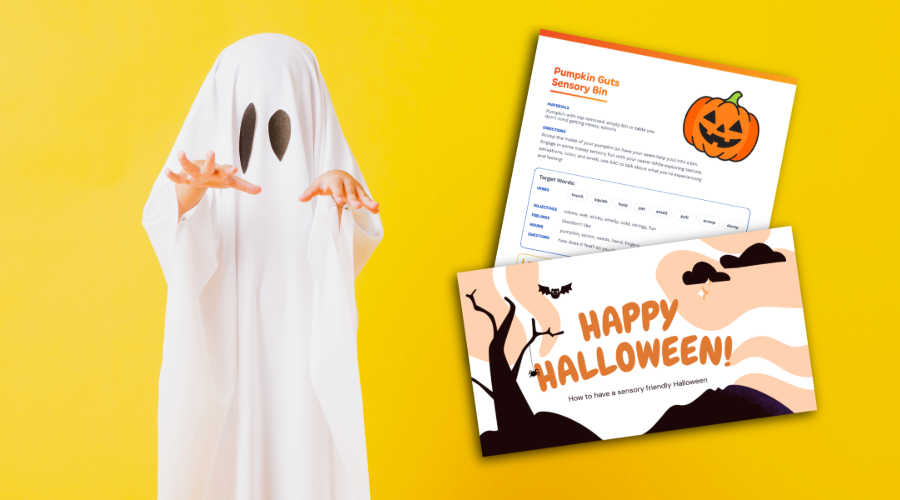
This guide shares five Halloween activities for therapy sessions, each with target vocabulary and access adaptations, plus a sensory-friendly social story to help AAC users get ready for trick-or-treating. Scroll down to download both free resources!
Tips for Implementation
Keep these implementation tips in mind across every activity:
- Model target words on the AAC user’s system as you talk through each step.
- Pause and give plenty of wait time after you model.
- Honor all communication attempts, including gestures and approximations.
- Treat “don’t like,” “stop,” and “all done” as valid messages, especially during messy sensory play.
Activity 1 – Core Word Bracelet
Start the season with a lite-tech core word bracelet featuring hi, go, stop, trick, or, treat, help, thank you, more, and all done. Cut out the strip, cut each end only to the short mark, then wrap it around the wrist and slide the notches together. No tape needed.
Try it: Send bracelets home so families and caregivers can model “trick or treat” and “thank you” on Halloween night, even when the device is not in hand.
Activity 2 – Handprint Spider Art
Paint the AAC user’s hand with washable black paint and press it onto paper. Repeat with the other hand so the palms meet in the center for the spider’s body and the fingers become legs. Once dry, add googly eyes and a mouth. Talk about the process and the final result along the way.
Target vocabulary: paint, brush, push, help, wipe, wash; colors, wet, sticky, dry, fun, cool, spooky, silly; spider, eyes, mouth, legs; where, how big, how many
Adaptation: Make spider web art instead. Connect a switch to a hand mixer using PowerLink, dip the whisk end in a paint color the user chooses, and lower it to the paper. The user activates the switch to create the web design.
Activity 3 – Pumpkin Guts Sensory Bin
Scoop the inside of a pumpkin into a bin, or have the AAC user help. Explore texture, temperature, color, and smell together while modeling what you notice and how you feel about it.
Target vocabulary: touch, squish, hold, pat, smell, pull, scoop, dump; colors, wet, sticky, smelly, cold, stringy, fun; like, don’t like; pumpkin, spoon, seeds, hand, fingers; How does it feel? Do you like it?
Adaptation: Scoop the pumpkin guts into a gallon zip-top bag for a contained mess. This works well for users who are more sensory defensive or for placing on a wheelchair tray.
Activity 4 – Halloween I Spy
Take photos of Halloween decorations around your setting, such as bulletin boards, clinic décor, or decorations outside. Print them as a checklist, then go “spy” each item together. Use the device to describe what you are looking for and where you find it.
Target vocabulary: go, look, see, help, stop; colors, shape, size, spooky, silly, pretty, fun; left, right, up, down, on; decoration names and locations (outside, on a shelf, on a bulletin board, in a yard, on a house); Do you see it? Where is it? Which is your favorite?
Adaptation: Program a BIGMac button or similar low-tech device to say “I see it!” during the search.
Activity 5 – Play Dough Monster
Set out play dough with googly eyes, straws, popsicle sticks, pipe cleaners, and any other add-ins you like, such as feathers or glitter. Build a monster together, or make your own as a model, and describe each creation by size, shape, body parts, and materials.
Target vocabulary: roll, put, pat, squeeze, make; colors, shape, size, spooky, silly, pretty, fun; in, out, on, off, on top, on bottom; body parts and materials; What are you making? What will you add? Where will you put it?
Adaptation: Assign the numbers 1–6 to different body parts, then use a switch with the All-Turn-It Spinner (or similar) to choose which part to add next.
Prepare for Trick-or-Treating with a Social Story
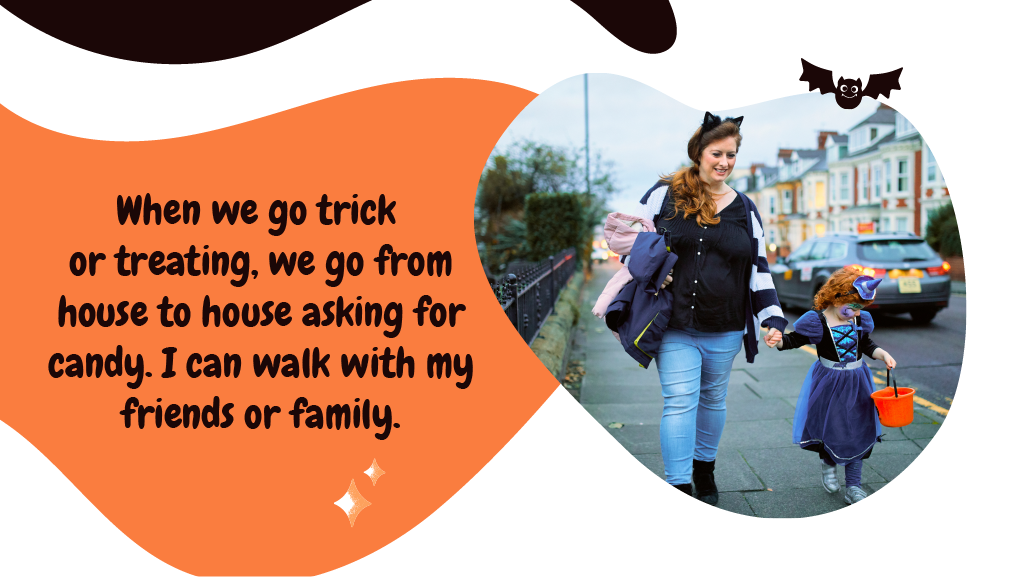
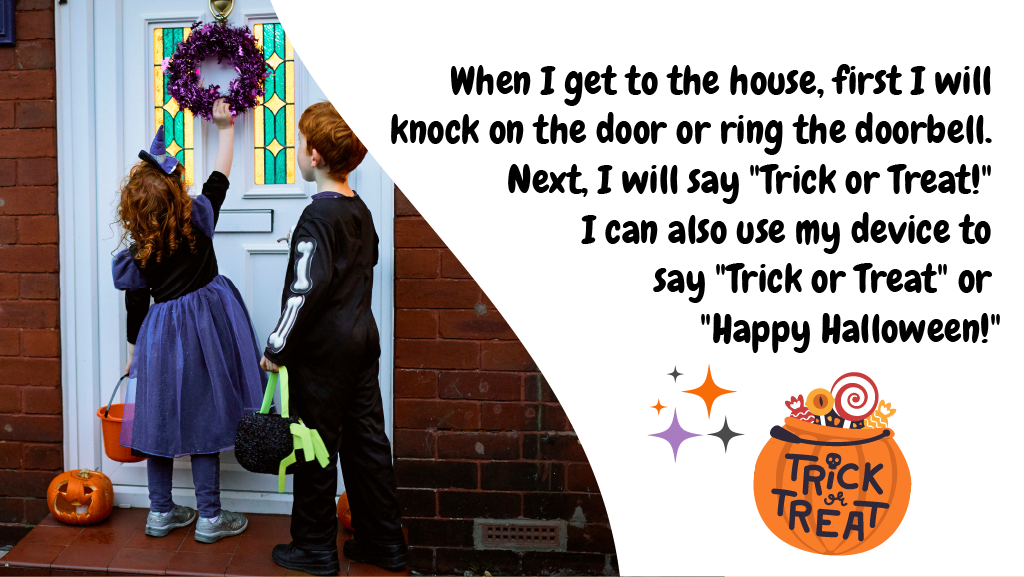
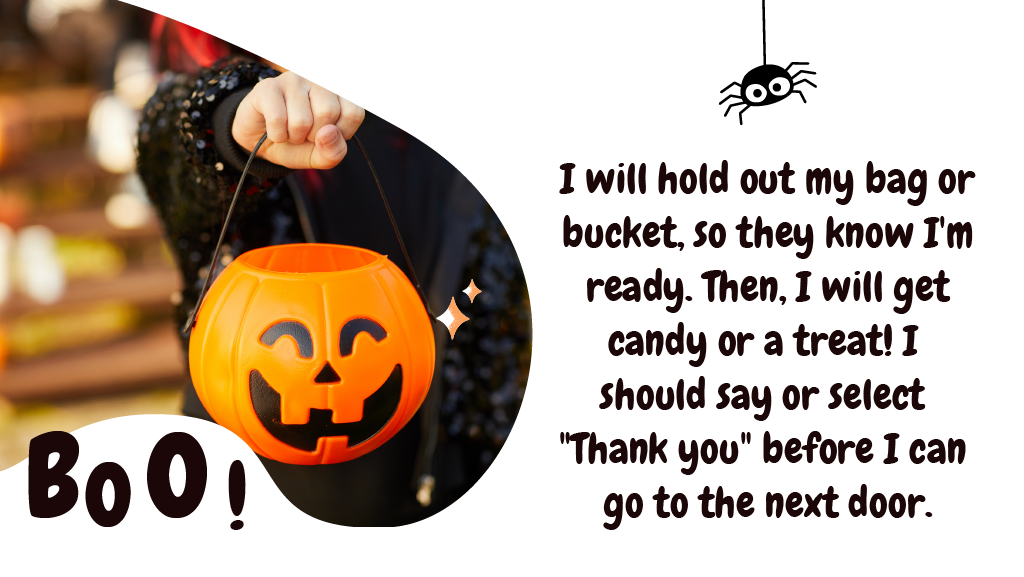
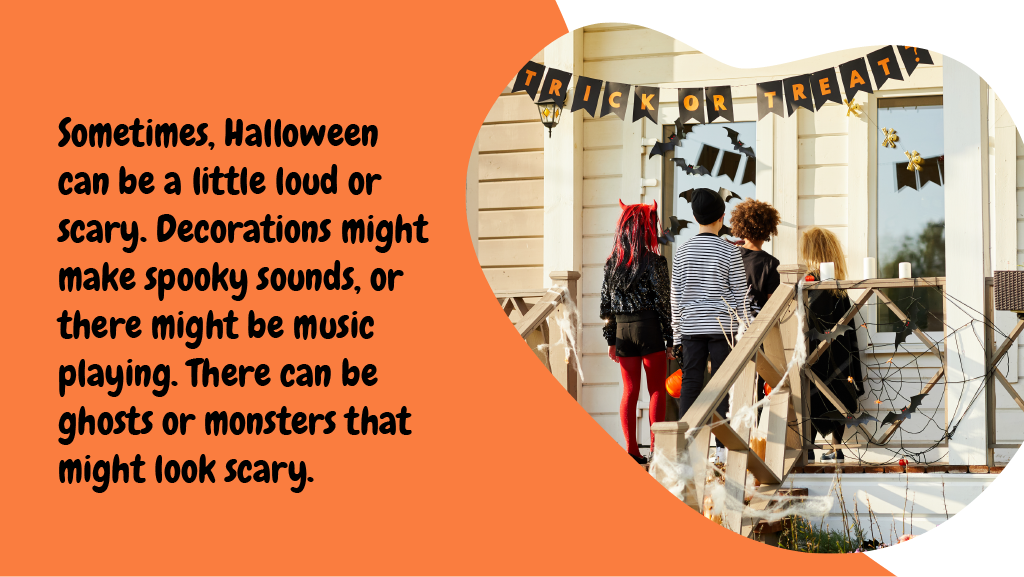
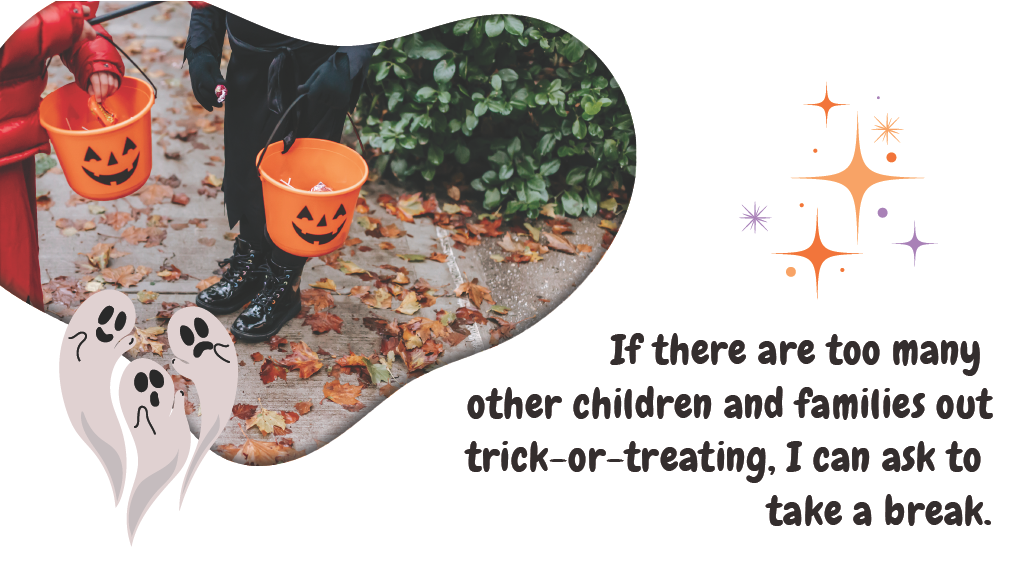
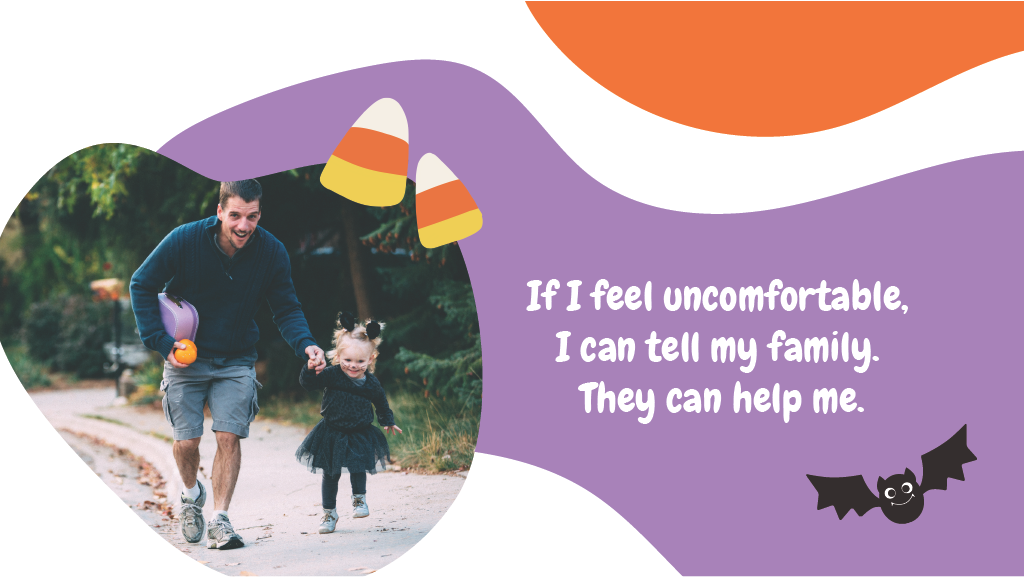
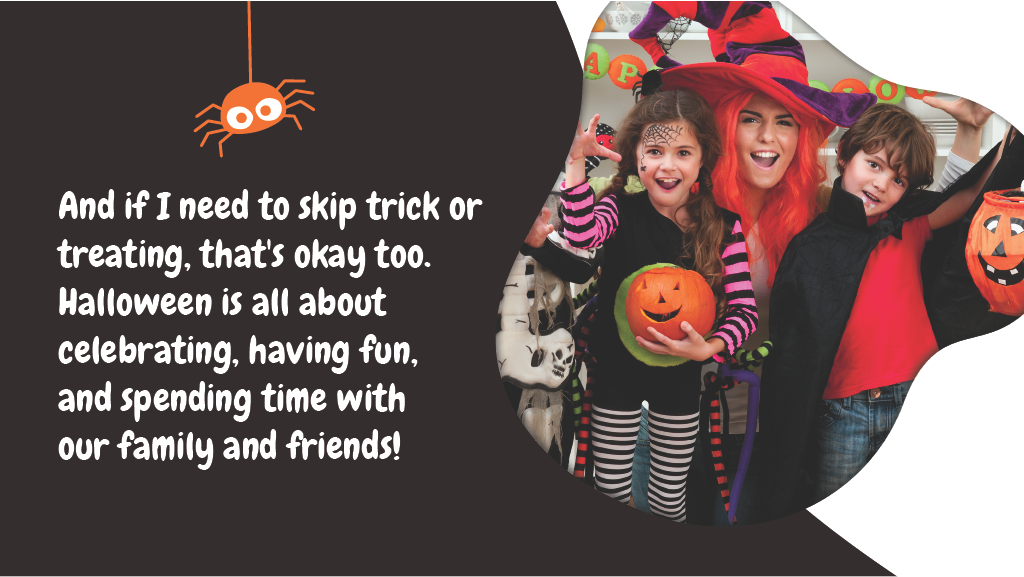
Using social stories can help prepare AAC users for new experiences! This Halloween social story explains what happens on October 31st, from picking a comfortable costume to going house to house. It shows the AAC user using their device to say “Trick or treat!” and “Thank you,” and it normalizes feeling scared by loud decorations or crowds.
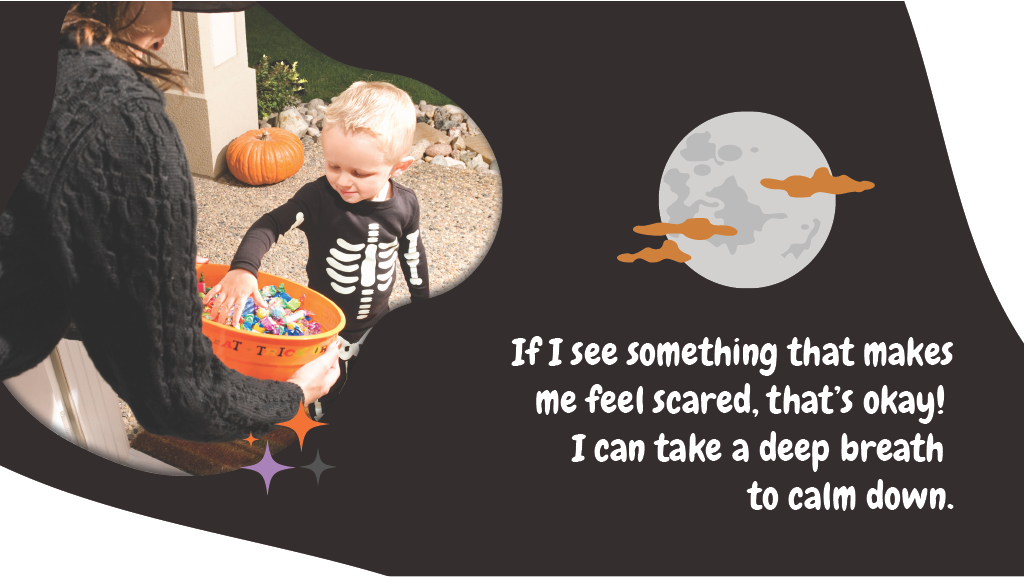
The story also offers clear coping options: take a deep breath, ask for a break, tell family members, skip a house, or skip trick-or-treating altogether. Read it in sessions throughout October, then share it with families and caregivers to read at home before the big night.


Make Halloween a Time to Talk
Halloween is full of motivating, hands-on moments that make AAC modeling feel natural. With a little preparation, AAC users can join in the crafts, the sensory fun, and the trick-or-treating on their own terms.
Every holiday is a new chance to connect, communicate, and celebrate, and every communication attempt matters.
Download These Halloween Activities!