10 AAC Implementation Tips for SLPs



Implementing AAC takes more than just handing off a device; it requires thoughtful support, patience, and the right strategies to help AAC users communicate effectively. These 10 practical tips will help you create an environment where communication can flourish.
Read on for tips and download the free PDF guide!
Assume Everyone Has Potential
Believe that each person has the capacity to learn, connect, communicate, build literacy skills, and make a positive impact in society.
- Foster this belief by offering a robust AAC system, literacy teachings, and showcasing AAC techniques as early and frequently as possible.
- Remember, it’s never too late to start!
Demonstrate AAC in Action
Infants grasp spoken language through consistent exposure and many models. AAC users are no different.
- Model AAC by speaking while pointing to the corresponding symbols on the device.
- Start small. Model 1-2 keywords at first, then expand from there.
- Remember: there’s a difference between prompting (encouraging someone to speak) and modeling (serving as an example)
Don’t Let Perfect be the Enemy of Good
It’s okay if you don’t know everything about implementing AAC. The process is often as unique as the AAC user.
- Learning alongside the user can strengthen the bond between you and the user.
- Don’t know where a specific button or folder is? Model how to fix a mistake! This teaches users that mistakes are okay and how to fix them.
Prompt With Care
Avoid over-helping which can foster dependency and send unintended messages.
- Be careful about how you encourage users to speak and refrain from dictating their words.
- Instead of prompting, try giving users extended wait time, cueing the user by pointing to the device, or using a visual reminder to use the device.
Engage Rather Than Examine
Individuals with complex communication needs often feel restricted in many aspects of life. Making language feel like a chore or test can be discouraging.
- Always ask, “Am I teaching or testing language?”
- Offer an interpretation instead of assuming. Starting sentences with “Maybe” or “I wonder” encourages interaction.
Be Patient; Wait Longer
Many AAC users need extra time for comprehension and response formulation. Resist the urge to interrupt; patience is key.
- Silently count and wait for 10-15 seconds before interjecting.
- While waiting, maintain an encouraging gaze, indicating your anticipation and respect for their input.
Promote All Language Functions
For well-rounded communication skills, AAC users need to master many language functions outside of requesting.
- Teach users to request, comment, describe, inquire, protest, defend their stance, and more!
Tailor AAC Systems to the User
Customize the AAC system for your user’s specific needs and include them in the process.
- Update vocabulary, auditory settings, icon images, language layout, voice selection, and more!
- Aim for a blend of core vocabulary and fringe phrases. Consider an integrated keyboard.
Allow Time for Language Learning
Typically developing children take years to perfect their language skills. It’s unrealistic to expect AAC learners to become fluent immediately upon receiving their system.
- Recognize the unique learning curves of people with complex communication needs. Allocate more time and resources for their language building to support them!
Cultivate a Supportive Environment
Encourage those around the AAC user, such as family, friends, and educators, to learn and use AAC effectively.
- Provide training and support to ensure everyone can communicate inclusively.
- Integrate AAC into daily interactions and routines!
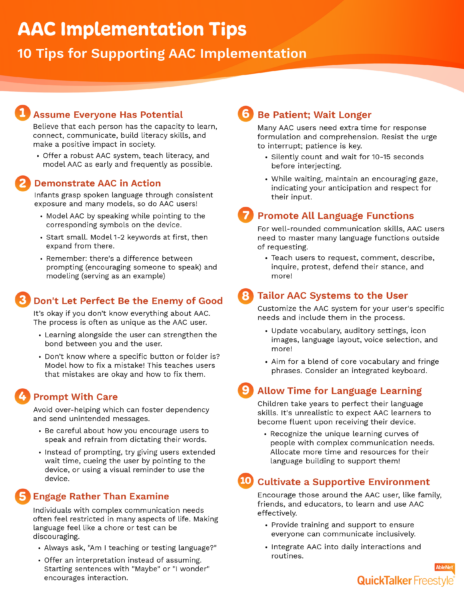
Save This as a Reminder
Download these 10 tips as a reminder of excellent AAC implementation.
Need More Advice? Ask an SLP!
From speech app guidance to AAC resources, our SLP Empowerment Team is here to help!