Enhancing Communication for Adults through AAC


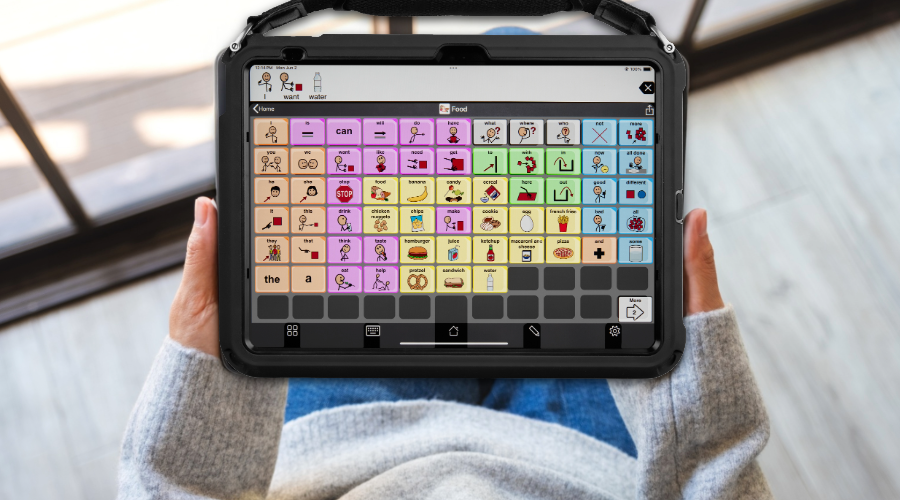
Stroke, brain injury, or neurological diseases can significantly impact a person’s ability to speak, understand, read, or write. Augmentative and Alternative Communication (AAC) provides tools and strategies to support functional communication, increase independence, and improve overall quality of life.
What Is AAC?
AAC includes a wide range of communication supports—both low-tech, such as communication books or whiteboards, and high-tech, such as dedicated speech-generating devices. It can be used alongside any remaining verbal abilities to support both understanding and expression.
AAC for Adults: Key Considerations
Use of AAC is highly individualized and should take into account:
Communication Profile
- Type and severity of impairment (expressive, receptive, global, stable vs. progressive)
- Impact on daily participation and independence
Cognitive and Motor Abilities
- Access methods (touchscreen, switch, eye gaze, partner-assisted scanning)
- Need for caregiver or communication-partner support
- Anticipated changes for adults with progressive conditions, who may require evolving access options over time
Personal Lifestyle and Preferences
- Work roles
- Hobbies
- Social and family communication needs
Environment and Support Network
- Caregiver involvement
- Clinical supports
- Technology comfort level
Types of AAC Tools for Adults
Low-Tech Options
- Communication books or photo albums
- Pen and paper
- Yes/No cards
- Whiteboards
High-Tech Options
- AAC apps or text-to-speech apps on smartphones/tablets
- Dedicated speech-generating devices
- Devices with switch access or eye-gaze technology
AAC Tools Designed for Adults
The following AAC apps are well-suited for adults with aphasia, dysarthria, or other acquired communication disorders. These tools offer adult-appropriate vocabulary, interfaces, and customization beyond child-focused designs.
Icon-Based AAC
| App | Overview | Notable Features |
|---|---|---|
| Aphasia Duo (Smartbox) | Symbol- or text-based communicator. Suitable for a wide range of adult users (aphasia, ALS, CP). | Visual scene page sets Whiteboard Storytelling supports |
| TD Snap Aphasia | Aphasia-specific page set from TD Snap for people going through language recovery. | Visual scenes Partner-assisted features Therapy supports |
| TouchChat: Aphasia | Offers symbol-supported vocabulary for adults who need both symbol and text support. | Visual scenes Organized categories Calendar |
Visual Scene Apps
| App | Overview | Notable Features |
|---|---|---|
| Snap Scene (Tobii Dynavox) | Visual scenes ideal for adults with aphasia or cognitive-linguistic needs | Supports contextual conversations Snap a photo and add audio |
| Scene and Heard | Interactive visual scene displays useful for adults with aphasia, TBI, or dementia. | Record and import videos Create hotspots Sharing to Facebook and Twitter |
Text-Based AAC
| App | Overview | Notable Features |
|---|---|---|
| Predictable | Designed for users with literacy skills and acquired or progressive speech loss. | Advanced prediction Email/text integration Multiple voice options |
| Proloquo4Text | Text-to-speech app for adults with intact literacy but limited or no speech; includes customizable categories and quick phrases. | Customizable categories Quick phrases 150+ voice options |
| Dialogue AAC | A spelling- and phrase-based system offering 60‑ and 84‑location layouts and predictive features to speed communication. | 60- and 84-location layouts Predictive text Personal voice |
| Spoken AAC | Text-based AAC with optional visual supports for teens and adults | Aphasia focused features ElevenLabs Integration |
| Speech Assistant | Text-based AAC with optional symbol supports | Preprogrammed phrases Quick topic switching |
Tips for Choosing an AAC App for Adult Clients
Consider the following:
- Does the client have literacy skills?
- Do they need symbols to support comprehension or expression?
- Will the user benefit from photos, videos, or recorded messages?
- Does the device need to integrate calendars, schedules, therapy activities, or work tools?
Additional Tip
- Adults using a QuickTalker Freestyle can create a personal voice that sounds similar to their own. Learn how to get started with Personal Voice
Role of AAC in Recovery and Daily Life
For many adults, losing the ability to communicate is one of the most overwhelming parts of their recovery journey. They may also be adjusting to challenges with mobility, feeding, cognition, or daily activities.
AAC empowers adults by:
- Allowing them to participate in medical decision-making
- Communicating wants, needs, preferences, and questions
- Staying connected with family and friends
- Expressing goals for therapy
- Maintaining identity and autonomy
Communication is a critical part of healing, and AAC gives adults their voice back.
Strategies for Supporting AAC Use With Adults
Ensure AAC is available throughout the day
Keep devices charged, accessible, and within reach during therapy, meals, and appointments.
Program relevant, meaningful vocabulary
Add topics important to the adult—favorite sports teams, hobbies, pets, family names, games like Scrabble, etc.
Demonstrate the benefits
Model AAC use during conversations so adults can see how it supports communication.
Create success early
Use AAC during predictable decision-making tasks to build confidence and independence.
SLP Empowerment is Your Support Team!
Incorporating AAC into an adult’s life takes time and patience. There may be moments of frustration, but what matters most is restoring dignity, autonomy, and choice. AAC has the power to reopen doors, whether that means FaceTiming grandchildren, returning to a weekly bowling league, or participating fully in medical care and daily life.
You are not alone in this process. If you need support, schedule a meeting with our SLP Empowerment Team.