Ready to Make New Friends: Introducing AAC to New Caregivers




Last Updated: November 5, 2026
Military families know that our support systems can change quickly. PCS season might mean a new babysitter, new neighbors, new friends, or new caregivers who are meeting your child and their QuickTalker Freestyle for the first time.
And let’s be honest: it can feel like a lot to explain.
You might be tempted to give someone a long list of instructions about how to use your child’s device. But you don’t have to teach them everything at once. Start with three simple things: model, wait, and listen.
Model
One of the easiest ways to show someone how to support your child’s AAC is to let them watch you do it.
Use the QuickTalker Freestyle during everyday activities and show them how you naturally use it to communicate with your child.
You might say:
- “Let’s GO.”
- “I WANT more.”
- “Time to EAT.”
They don’t need to know every button or every word on the device. Seeing you use it helps show them that AAC is just another way your child communicates.
And once they see you using it, invite them to try it, too.
Wait
This one can be hard, especially when we’re used to jumping in to help our kids.
Show the caregiver that your child may need a little extra time to process a question, find a word, or put together a message.
Try asking your child a question and then pause.
You can even tell the caregiver: Give them a few extra seconds. They might need some time to figure out what they want to say.
That little bit of wait time can give your child the opportunity to communicate independently instead of having someone guess what they need.
Listen
Show them what you do when your child communicates even when the message isn’t exactly what you expected.
AAC isn’t a test, and your child doesn’t have to find the “right” button every time.
If you’re not sure what they mean, show the caregiver how you work through it together.
You might offer a choice, ask a follow-up question, or model some additional words on the device.
“I think you’re telling me you want something. Let’s figure it out.”
The goal isn’t perfect button presses. The goal is communication.
Make It Easy for the Next Person
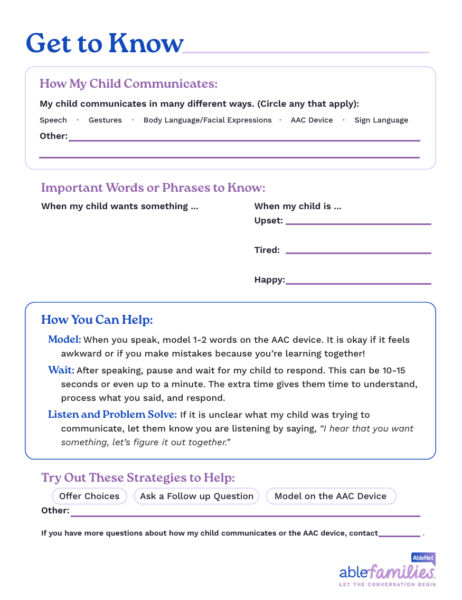
If you’re frequently meeting new people because of PCS moves, new duty stations, or changes in childcare, a simple cheat sheet can save you from having the same conversation over and over.
Keep it short and include things like:
- How my child communicates: What yes/no looks like, how they get attention, and other important communication signals.
- Words to know: A few important words or phrases your child uses often.
- How to support communication: Model, wait, and listen.
- What helps: Favorite activities, interests, or things that make communication easier.
- What to avoid: Things that may make communication more difficult.
- Where to get help: Who to contact if they have questions about the device.
You don’t have to teach someone everything about AAC before they can communicate with your child.
Start with three things: model, wait, and listen.
Whether you’re welcoming a new babysitter, introducing your child to a new friend, or helping a new caregiver get comfortable with the device, these simple steps can help make sure your child’s voice comes with them wherever military life takes your family.
Mission Ready Tip
Create a simple QuickTalker Freestyle Caregiver Cheat Card or download one below and keep a copy where caregivers can easily find it. When life gets busy, your care plan changes, or you find yourself starting over at a new duty station, you’ll have a quick way to help the people around your child understand how to support their voice.
Have a Question?
Contact a customer support team or submit a question to a Parent Enthusiast.